
Buying guide
The whole process, written for someone who isn't in the country.
Ownership rules, documents, money, signing and the costs that continue after turnover. Eight sections, no jargon, and an honest note on what I can't promise.
01
Can I buy Philippine property from abroad?
Foreign buyers may be eligible for some condominium units, depending on the project structure and applicable foreign-ownership limits. Ask DMCI Homes and a Philippine property lawyer to confirm eligibility for the specific project and unit before you reserve.
In practice a buyer in Oslo, Dubai or Toronto can hold a Condominium Certificate of Title in their own name, without a Filipino spouse, a local partner or a corporation. House-and-lot purchases work differently and carry ownership restrictions, so I don't recommend them for non-Filipino buyers.
- Condominium units: confirm the development’s ownership structure, eligibility and remaining foreign allocation
- Land and house-and-lot: restricted for non-Filipino buyers
- Filipino citizens abroad, dual citizens and former citizens: verify which rules and documents apply to your citizenship status
02
What you actually own
A condominium unit comes with a Condominium Certificate of Title (CCT) registered in your name at the Registry of Deeds. The land and shared areas belong to the condominium corporation, of which you become a member with a share proportional to your unit.
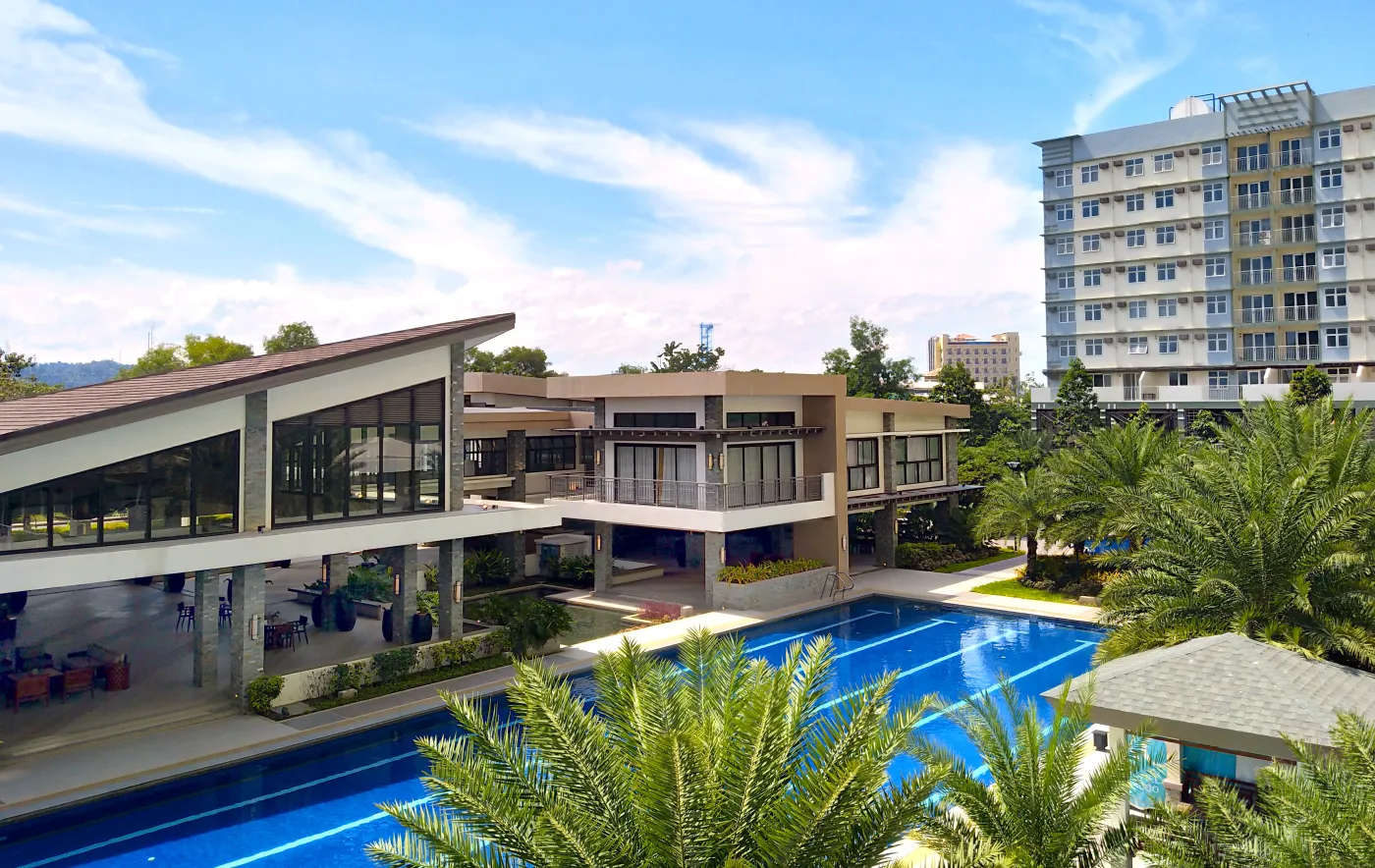
That structure is what makes foreign ownership possible, and it is also what you are paying for: the unit itself plus a share of the pools, gardens, lobbies, corridors and facilities that DMCI Homes maintains through the property management office.
- Your unit: titled, transferable, inheritable
- Shared areas: owned through your share in the condominium corporation
- Monthly dues: cover security, cleaning, maintenance and amenities, and are separate from your mortgage
03
The money: what you pay, and when
Ask DMCI Homes for the unit’s written reservation conditions, downpayment schedule and balance due date. Confirm whether the reservation fee is credited, when it is refundable, and which payment or financing options apply.
On top of the price, budget for closing costs: documentary stamp tax, transfer tax, registration fees and notarial fees. These are normally a small percentage of the price and are itemised in your contract, so ask for the number in writing before you reserve.
- Reservation fee: usually non-refundable, credited to your downpayment
- Downpayment: confirm the amount, instalment schedule and any charges in writing
- Balance: confirm available payment options and the related due dates
- Closing costs and monthly dues: separate from the price, confirm the exact figures before reserving
04
The documents you'll need from abroad
Nothing here is exotic, but everything has to be current. A passport that expires within a year will hold up your bank application, and a missing TIN delays the title transfer later.
If you are buying alone, the paperwork is yours to sign. If a relative in the Philippines will sign for you, that requires a Special Power of Attorney, and it has to be notarised and then authenticated, either apostilled or consularised at a Philippine embassy.
- Valid passport and, if applicable, marriage certificate
- Tax Identification Number (TIN) — can be applied for as part of the process
- Proof of address abroad and proof of income: employment contract, payslips, bank statements
- Special Power of Attorney, apostilled or consularised, if someone signs on your behalf
05
Signing from 10,000 kilometres away
Reservation forms can be completed remotely. The contract to sell and the deed of restrictions then go out to you for signature, either electronically or by courier, depending on the project and the stage.
The step that catches people out is the Special Power of Attorney. Book your embassy appointment early, allow several weeks for apostille or consularisation, and send the original by courier with tracking. I check the wording before it goes out so it isn't rejected at the other end.
- Reservation: usually completed online with scanned documents
- Contract signing: electronic or courier, depending on the project
- SPA: notarised abroad, apostilled or consularised, original couriered to Manila
06
Paying from abroad, without surprises
Payments go to DMCI Homes' official accounts, never to an individual. Keep every remittance receipt and a record of the exchange rate used: you will need them for the bank, for the title transfer, and later if you sell or rent out the unit.
If you plan to borrow, banks look closely at a documented history of regular remittances. Two years of consistent transfers, even modest ones, tell a better story than one large lump sum that arrived last month.
- Pay only to DMCI Homes' official corporate accounts, never to a person
- Keep receipts, bank confirmations and exchange rate records for every payment
- For a loan, a steady remittance history matters more than a big one-off deposit
07
The costs that continue after turnover
Ownership has a running cost, and buyers abroad are the ones most often surprised by it. Monthly association dues pay for security, cleaning, repairs and the amenities, and they rise as the building ages and as minimum wage moves.
There is also real property tax, paid annually to the city, and building insurance. If you rent the unit out, rental income is taxable in the Philippines, and the paperwork is easier to set up at the start than three years later.
- Association dues: monthly, based on unit size, budget for increases over time
- Real property tax: annual, paid to the local government
- Rental income: taxable, register with the BIR if you rent out the unit
- Utilities and furnishing: one-off costs at turnover if you plan to rent
08
The mistakes I see most often
The expensive mistakes are rarely about the unit. They are about the structure: putting the title in a relative's name to simplify things, skipping the verification of the title and the developer's licence to sell, or underestimating the monthly dues and the exchange rate over a five-year payment plan.
The other one is buying a pre-selling unit with no clear turnover date and no plan for who manages it when it is finished. Ask those questions before the reservation fee, not after.
- Buying under someone else's name: it complicates inheritance, sale and taxes later
- Skipping the title and licence-to-sell check: this is the first thing I verify
- Ignoring dues and FX over the payment period: model the monthly, not just the price
- No management plan for a rental: decide before turnover, not after
Please read
This guide is general information, not legal or tax advice. Philippine rules, taxes and bank policies change, and your situation may have details that matter. Confirm the specifics with DMCI Homes, your bank and a Philippine lawyer or accountant before you commit.
Not sure which one fits? That's what the call is for.
Twenty minutes, no commitment. Bring your budget and your questions, leave with a shortlist.